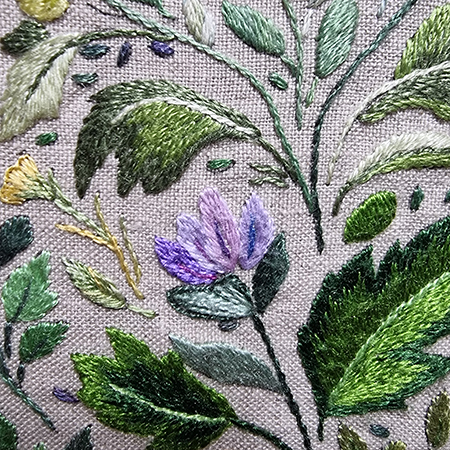
The garden is gradually taking shape
In today’s post, here are the small flowers that are gradually enriching the arrangement and complementing the three large flowers featured earlier.
At this stage, the embroidery really begins to come to life: a variety of daisies and ruffled clovers nestle among the foliage in a harmonious blend of soft, warm tones, lending the design greater rhythm, freshness, and movement.
These more subtle elements play a vital role in the overall balance of the design. They connect the different areas of the drawing, soften the contrasts, and gradually imbue the project with its richness, harmony, and that lively, spontaneous atmosphere that gradually brings the entire composition to life.
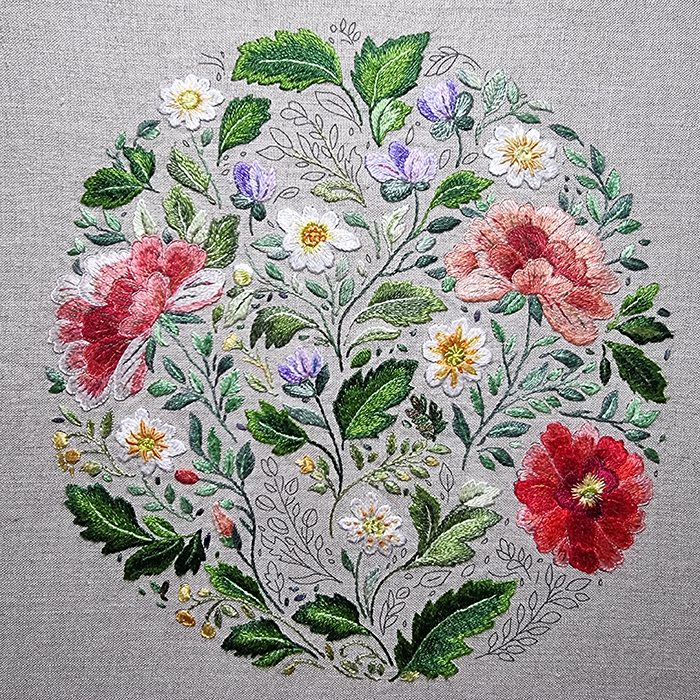
As with all of this project, I deliberately chose to keep the embroidery simple and spontaneous, focusing more on the color harmonies and the overall flow of the composition than on technical virtuosity.
Daisies
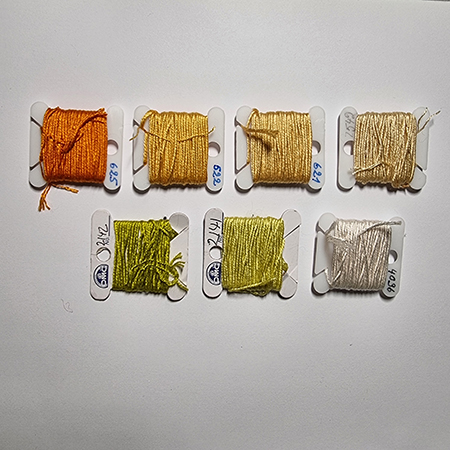

This first daisy blooms simply amidst the foliage, like a subtle touch of light that brightens the arrangement.
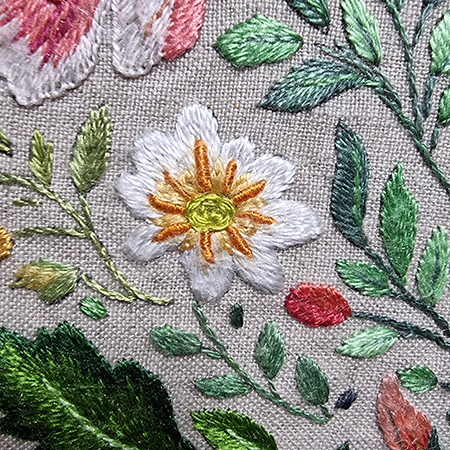
Here, the bolder center adds more contrast and gives the flower a more assertive presence while retaining its lightness.
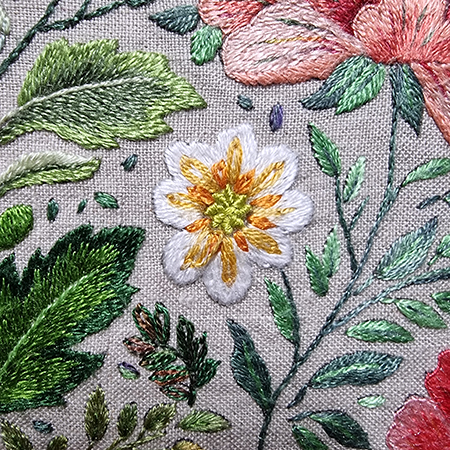
The slightly tapered petals and golden hues at the center create a delicate play of light that naturally draws the eye.
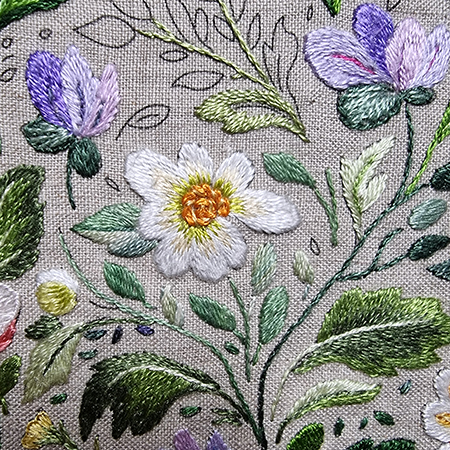
Softer and more delicate, this daisy seems to almost float among the branches and the small leaves around it.
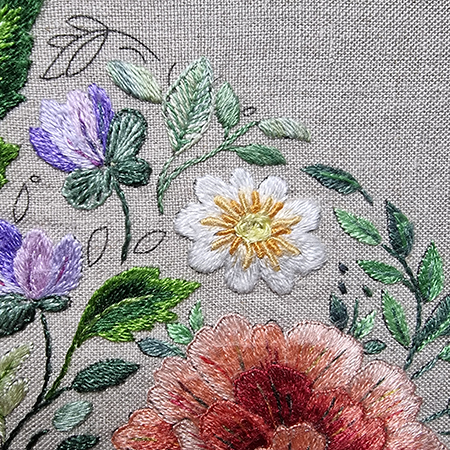
With its lighter center and open petals, this flower brings a touch of lightness amid the richer colors of the arrangement.
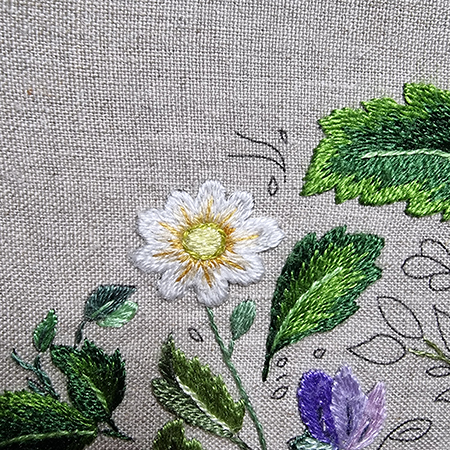
This final daisy, intentionally simpler in design, contributes to the overall balance of the pattern while reinforcing the rustic feel of the whole.
Clover
The clovers, too, were deliberately designed with simplicity in mind to preserve the lightness and spontaneity of the overall composition. Each petal is created using a long and short stitch technique in a different shade, while fine veins, embroidered with a gradient thread using a backstitch, delicately highlight the design and add depth and movement to these small, understated flowers.
They, in turn, add a fresher, more tangy note thanks to hints of mauve and lilac and the subtle thread that decorates the petals.
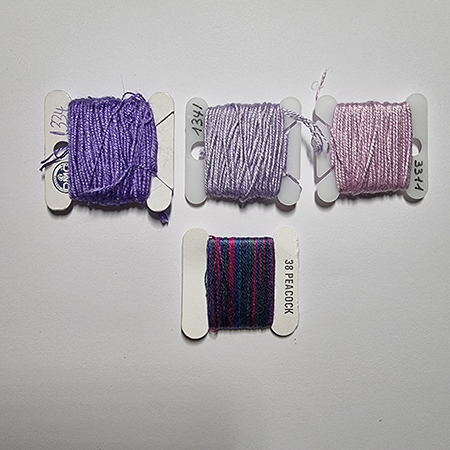
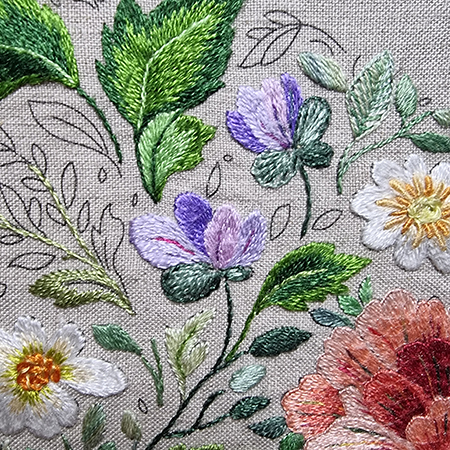
The first clover blossoms bring a light, spring-like touch, with their petals delicately tinged with mauve and purple.
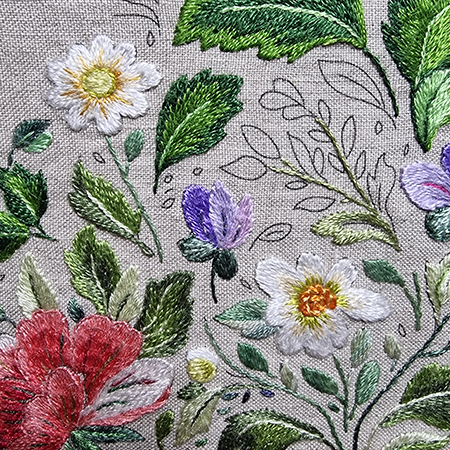
The variations in color add depth here and give the flowers an almost translucent appearance.