


From flower to honey
Preparation of the petals and temporary assembly of a flower
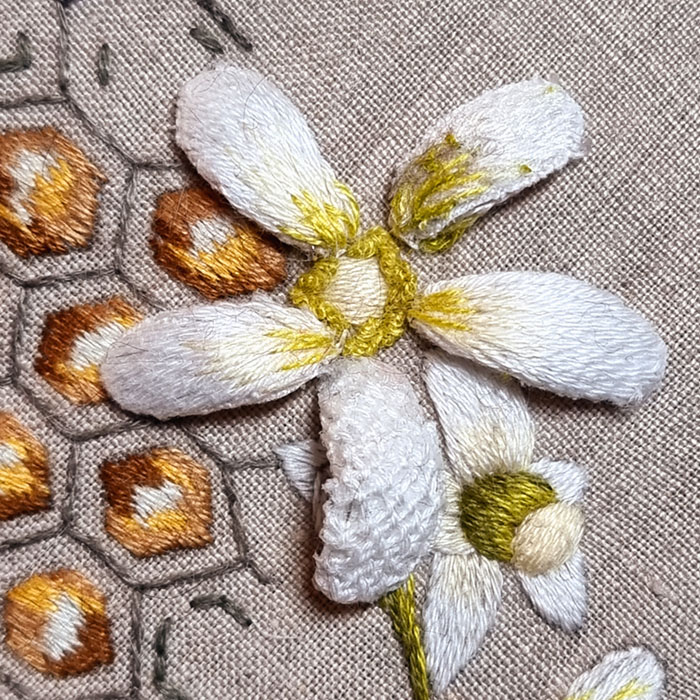
This article is dedicated to the realization of the petals in stumpwork as well as the temporary assembly of a flower.
Please note that this flower is only temporary because the petals are not attached. I made it just to give a first image of what I would finally like to get.
Here are the threads used to embroider these petals.
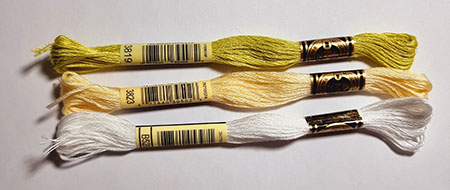
DMC stranded cotton B5200, 3823 and 3819
Of course I started to prepare my first petal according to the traditional method used in stumpwork but I quickly realized that the effect obtained was not what I had imagined.
So I changed my way of doing things a little bit and I will try to show you the differences between the traditional technique and what I choose to do.
I chose to make this work on a white linen base (to respect the main color of the petal) and with a thin and flexible wire.
To illustrate my point, I used the photos of the actual petals and the photos made for the explanations of butterfly wings in the project “Taking flight”.
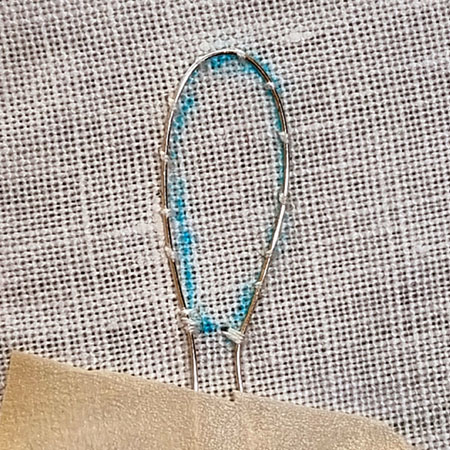
Form the outline of the petal with the wire, holding it in place with small stitches. Leave 2 “stems” of wire that will be used to attach the petal to the main part of the work.
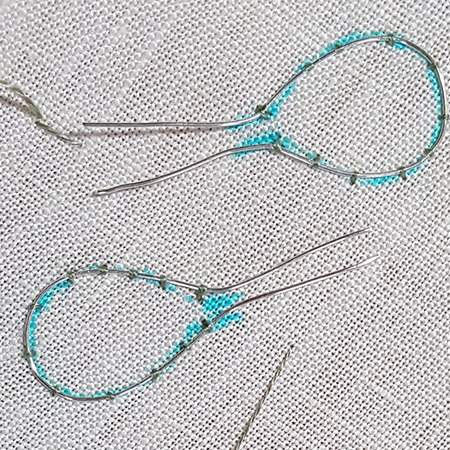
The same process was used to prepare the wings of the butterfly.
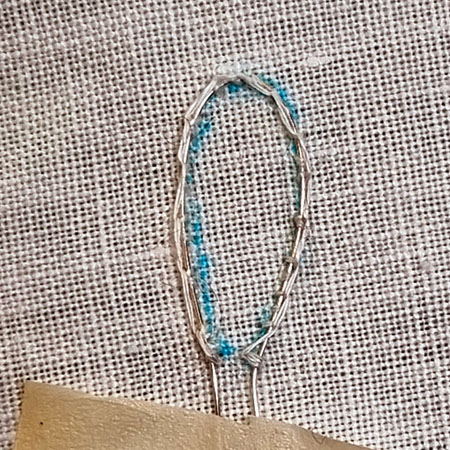
For the petal, the wire is held in place with a spaced far enough blanket stitch because it will be invisible when the design is completed.

For the wings of the butterfly, we had maintained the wire with a 1 thread blanket stitch executed very finely because it will be visible when the patterns are complete.
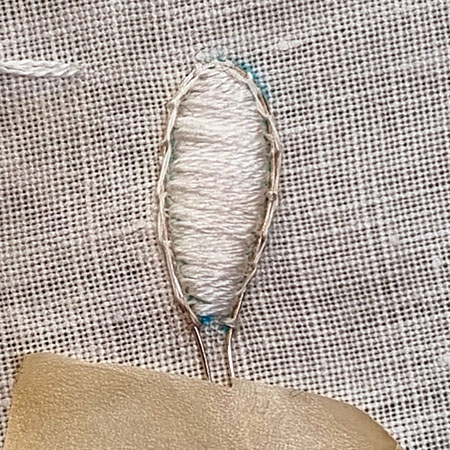
Before embroidering, the petal is first padded with stranded cotton 3 threads.
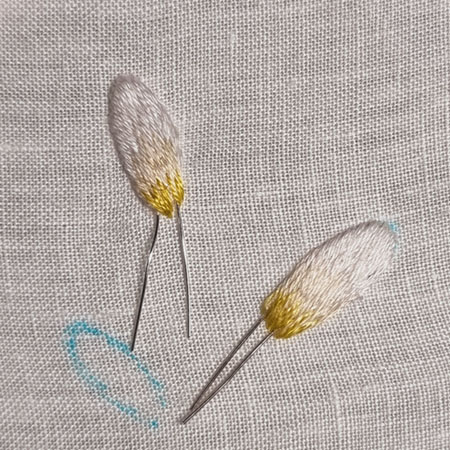
The surface of the petal is fully covered with long and short stitch but starting from the outside of the wire to cover it completely.

For the wings, we also chose to fill in the patterns with long and short stitch but working within the surface to keep the blanket stitch visible to form a decorative edge.
The project has 3 flowers composed of 5 petals each.
